




The Danger of Caterpillar Attacks on Red Onion
Share:
SGI - SGI Friends, onion caterpillar attacks often look simple at first. Only one or two leaves may appear translucent, white spots may emerge, or the tips of the leaves may look damaged. However, with the pest Spodoptera exigua, damage visible from the outside means that the larvae are already inside the leaves and actively feeding on the tissue. If the population develops without monitoring, the leaf area functioning for photosynthesis continues to decrease and bulb formation may also be disrupted.
Red onion is a vegetable crop that is widely favored and consumed in Indonesia, both fresh and processed. Consumption of red onion is quite high. Many Indonesians use red onion as one of the essential seasonings in cooking, its affordable price makes red onion highly favored, and red onion can also be used as one of the raw materials for medicines.
POPT Key Point Do not wait until the leaves are gone. For onion caterpillars, control decisions must begin with monitoring egg clusters, larvae, leaf damage, and plant age. The 5 to 55 DAP phase should be understood as a series of different risks, not a single period with the same action. |
Red onion cultivation cannot be separated from a decline in production yields due to plant pest organisms (PPOs) in the form of pests and diseases. This decline in production yields will certainly be a concern for red onion farmers. One of the pests that frequently attacks red onion plants is the caterpillar pest. This caterpillar pest can cause a decline in production yields and may result in losses.
The red onion caterpillar pest (Spodoptera exigua) attacks plants from the vegetative stage to the generative stage. Attacks by this pest can cause red onion leaves to become thin because the pest bites into the tissue inside the leaves. This pest causes the leaves to dry out and fall off.
The caterpillar pest (Spodoptera exigua) can attack red onion plants from the early stages of growth and can reduce production yields by 50–100%. These caterpillar pests can be green, light brown, or brownish-black. The color of the caterpillar is one of the characteristics indicating its age. Usually, caterpillars that are still green are young, while brownish-black caterpillars are older.
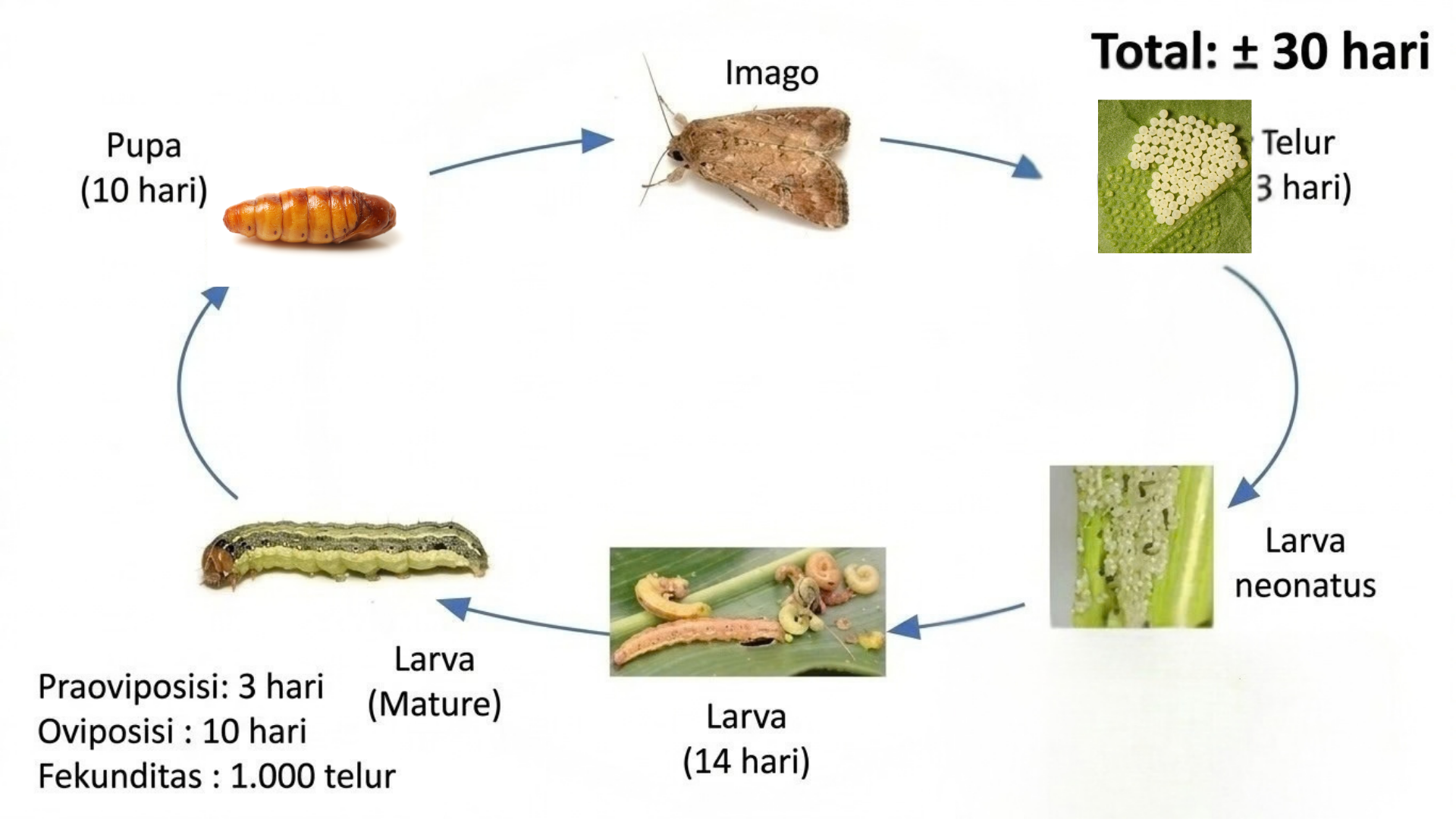
Figure. Life Stages of Red Onion Caterpillar Pest
The female moth begins laying eggs at 3–10 days of age. The eggs are round to elongated in shape. The eggs are laid on the surface of the leaves or leaf stalks and are covered with white hairs from the body of the parent moth. Each egg cluster contains a maximum of 80 eggs. A female moth can produce around 500–1,000 eggs, which hatch within 3–5 days.
After hatching from the eggs, the young caterpillars immediately bore into the tips of the leaves and then enter the red onion leaves, causing the leaf tips to appear perforated or cut. The caterpillars feed on the inner surface of the leaves while leaving the outer epidermis intact. As a result of the attack, the red onion leaves appear translucent when exposed to light or develop white spots, eventually causing the leaves to droop.
Initially, the caterpillars gather together. After the contents of the leaves have been consumed, the caterpillars quickly spread, and when the population is high, they also feed on the bulbs. The larvae and moths are more active from the afternoon through the night.
Differentiate Early Signs from Severe Damage
Stage | Field signs | Meaning for the plant | Initial action |
Early | Egg clusters or transparent white spots on several leaves. | Larvae are just beginning to develop; the opportunity to prevent spread is still large. | Remove egg clusters and affected leaves, record the location of findings. |
Developing | Leaves are perforated, translucent, drooping, and larvae begin to be found on many clumps. | Active leaf area decreases and damage has the potential to spread. | Intensify monitoring, evaluate control thresholds and POPT actions. |
Severe | Leaves dry out, are consumed, or damage is evenly distributed across the field. | Photosynthesis is disrupted and bulb formation or filling may decrease. | Take action based on technical recommendations; evaluate which parts can still be saved. |
Onion Caterpillar Attack Phases from 5 to 55 DAP
Unlike leaf miners, whose larvae form characteristic mines inside the tissue, onion caterpillar attacks need to be assessed from a combination of egg clusters, larval activity, leaf damage, and changes in leaf function at each growth phase.
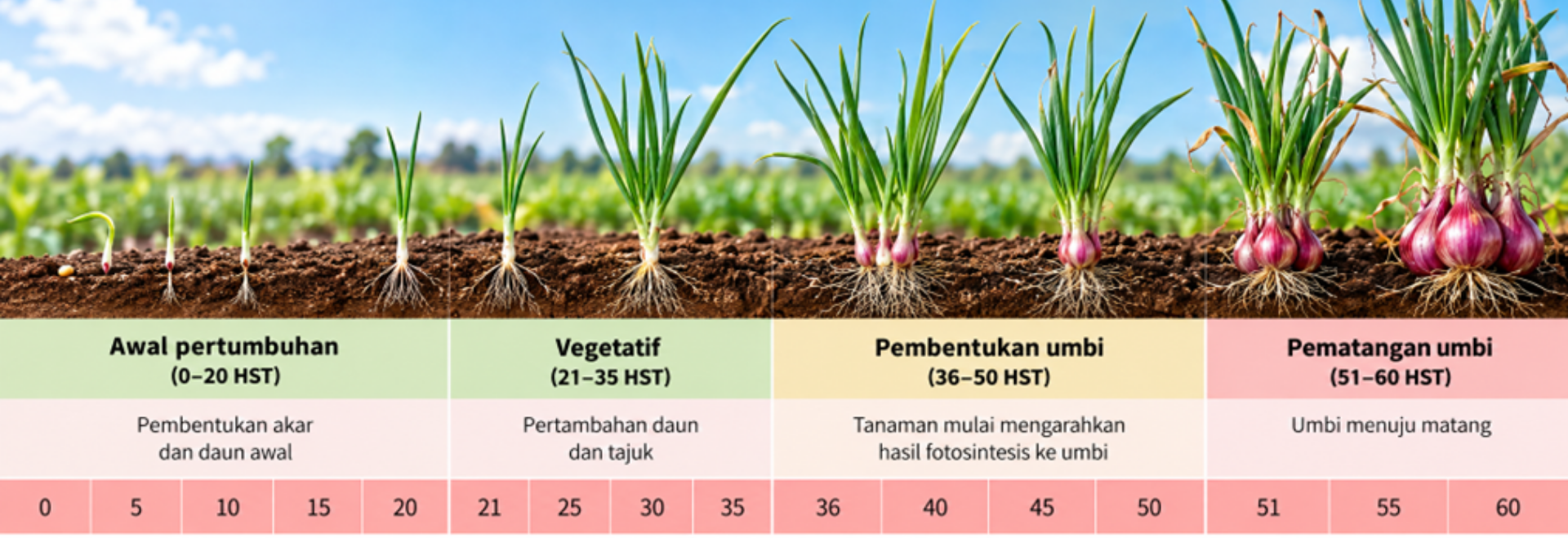
Figure. Red onion growth phases used as a monitoring guide from early growth, the vegetative phase, bulb formation, to maturation and harvest.
5-10 DAP: A Very Important Early Phase
At a very young age, the plants are just developing leaves and roots. Egg clusters of S. exigua can begin to be monitored from 5 DAP and, in some treatments, the control threshold based on egg clusters has been reached at around 5 to 12 DAP. This means that the first inspection should not be delayed until the plants look lush.
The POPT focus at this phase is to look for egg clusters on the leaves, observe translucent symptoms, and remove egg clusters or clearly affected leaves before the larvae spread. Damage to young plants is dangerous because the number of leaves is still limited. The loss of several leaves can take away a large proportion of the plant's photosynthetic capacity.
10-20 DAP: Early Vegetative Phase
The plants begin to increase the number and length of their leaves. Larvae that escape early monitoring can move to new leaves and cause wider damage. At this phase, SGI Friends need to compare healthy plants and affected plants, not merely count the number of caterpillars.
Check the proportion of damaged leaves, the presence of new egg clusters, and the pattern of damage between clumps. The Directorate General of Horticulture notes the practice of routinely collecting egg clusters and larvae at 7 to 35 DAP as one of the field measures that can suppress the population.
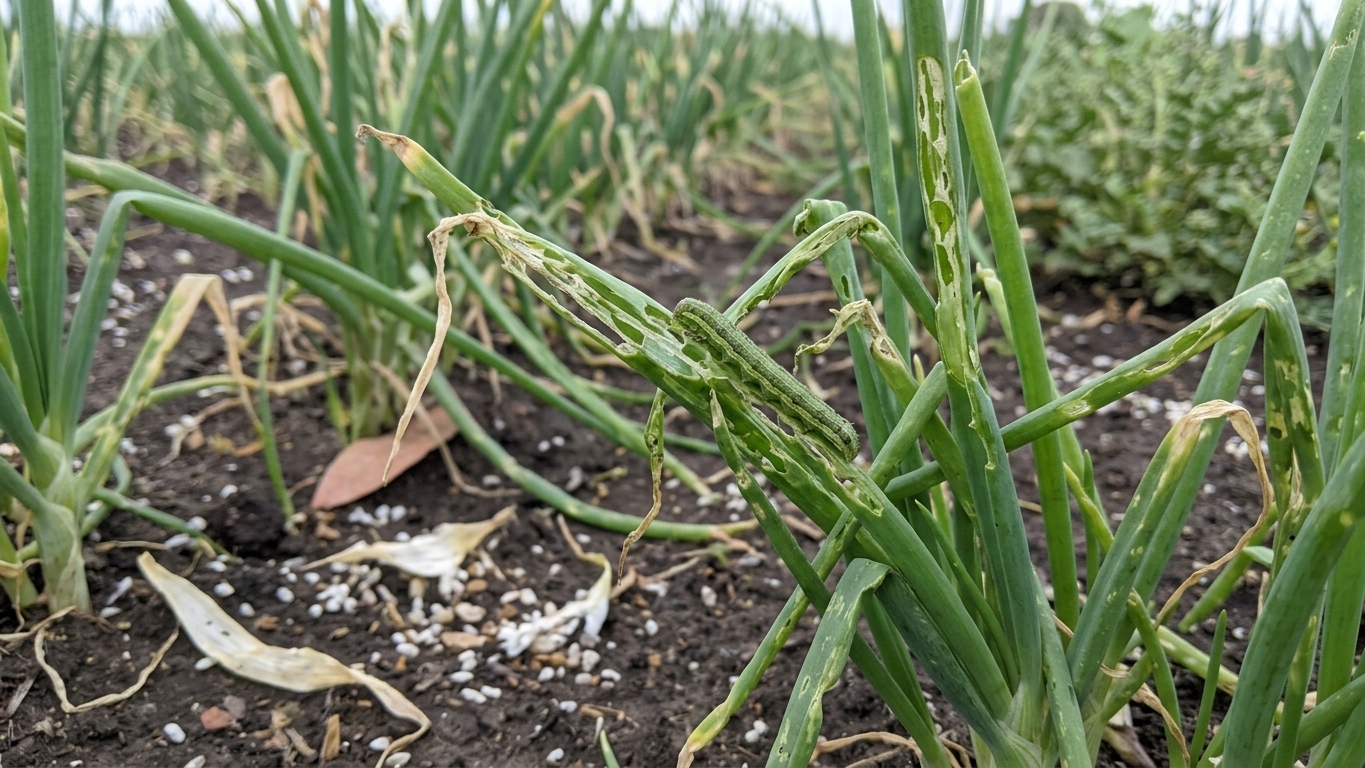
Figure. Caterpillar Pest Attack on Red Onion Plants
20-30 DAP: Active Vegetative Phase Toward Bulb Formation
The canopy becomes denser and the number of leaves increases. This condition requires more careful inspection because larvae can hide between the leaves. At this stage, the goal of control is not merely to keep the leaves looking green, but to maintain the effective leaf area that will supply photosynthetic products for bulb formation.
Use a consistent observation pattern. Select sample points that represent the edges and the center of the field, inspect leaves showing transparent white spots, and then record whether the damage has increased compared with the previous inspection. Pheromone traps can be used to monitor male moths and help assess population pressure.
30-40 DAP: Early Bulb Formation
When the bulbs begin to form, the leaves remain the main source of energy. Increasing leaf damage can reduce the plant's ability to form bulbs optimally. The POPT focus shifts from merely detecting pests to maintaining leaf function. If the level of damage and the population continue to increase, evaluate the control threshold. SGI Friends can carry out spraying before continuous attacks occur.
40-50 DAP: Bulb Enlargement
At this age, loss of leaf area risks disrupting bulb enlargement. However, spraying should not be carried out without a basis. Check whether the damage is still developing, whether the larvae are still active, and whether the moth population is increasing.
50-55 DAP: Maturation Toward Harvest
Approaching harvest, control decisions must become increasingly selective. The plants have entered the maturation stage and the time to harvest is getting shorter. Use insecticide before harvest; this is to prevent further damage.
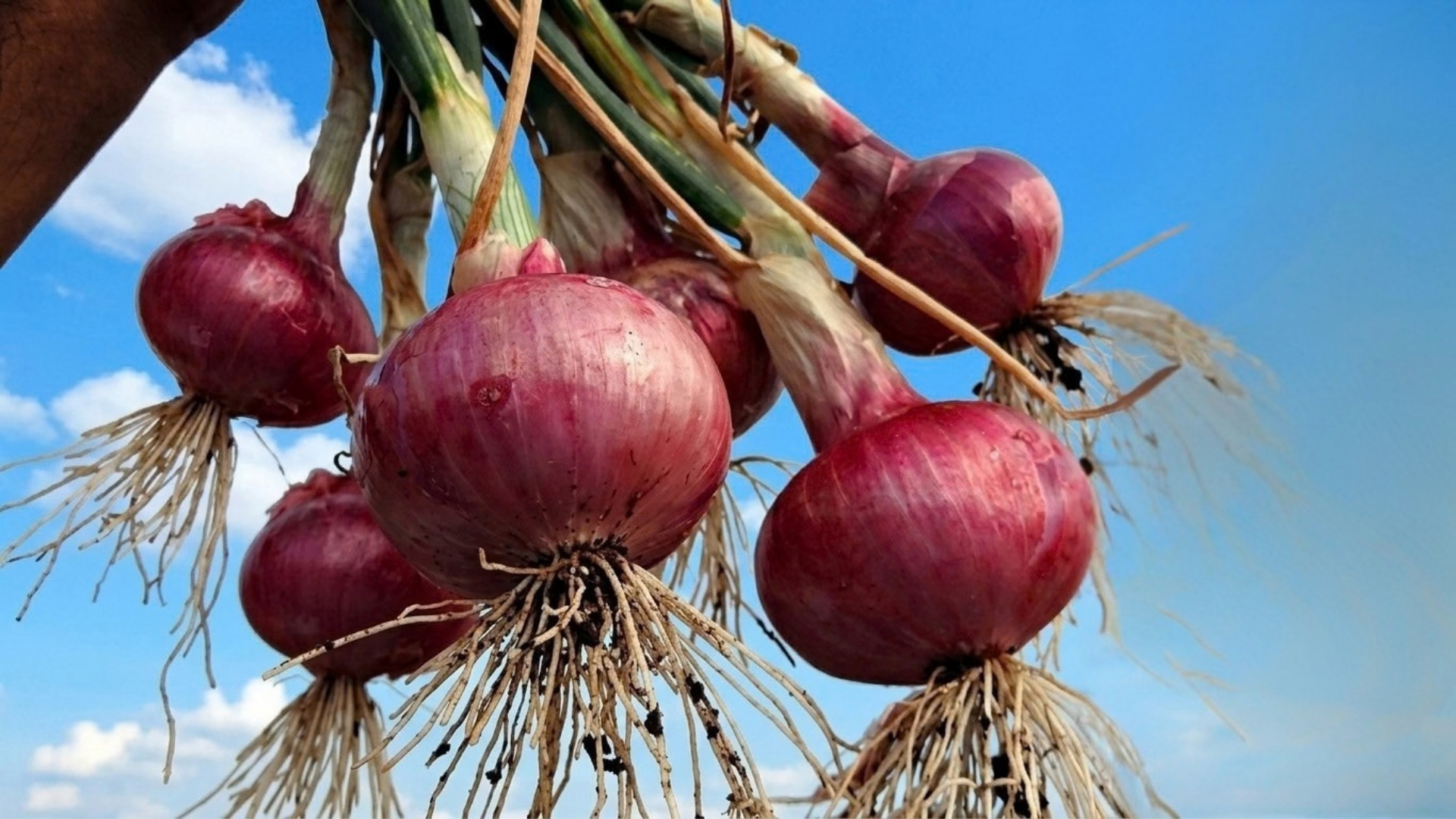
Figure. Red Onion Plants
Suitable environmental conditions can increase the development of pest populations. Abundant food availability and the presence of alternative hosts are supporting factors. This is due to planting that is not carried out simultaneously. The presence of alternative hosts can also trigger pest development because S. exigua larvae, when they no longer obtain a food source from red onion plants, will move to seek other food sources.
Under high-volume spraying conditions, spraying is carried out when signs of pest attack appear. If the pest population or attack intensity reaches the control threshold according to local recommendations. If it is still unclear, contact the authorized agricultural officer.
This red onion caterpillar pest is also one of the OPTs that farmers are concerned about because it causes a decline in harvest yields. Symptoms of this pest can be seen in the presence of transparent white spots on the leaves, perforated leaves, drooping leaves, drying leaves, and even leaves being completely consumed with nothing left.
From Early Detection to Bulb Protection
The danger of onion caterpillars is not only the number of perforated leaves, but the loss of leaf tissue when the plant needs photosynthesis to form and enlarge the bulbs. Therefore, control must follow the plant phase. Do not wait until the leaves are already gone; part of the photosynthesis has already been disrupted. Control should be carried out based on early observation. SGI Friends can schedule observations starting from 5 DAP, rather than after severe symptoms appear, by checking for translucent leaves or white spots.
SGI Friends can carry out regular inspections in the late afternoon because pest activity can increase toward nighttime, and spray Coastal 95/31 SC insecticide using a sprayer nozzle.
Coastal 95/31 SC as Part of the POPT Strategy
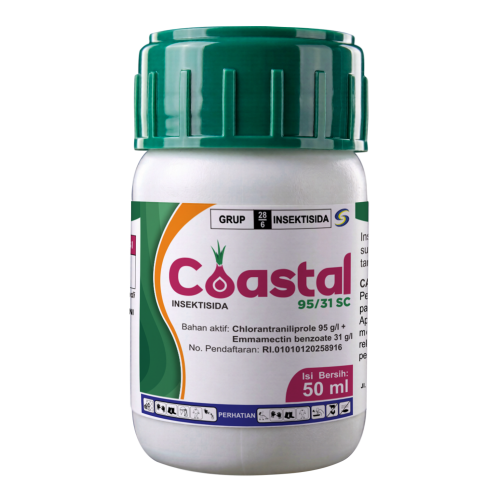
Figure. Coastal 95/31 SC Insecticide
Coastal 95/31 SC is an insecticide formulated as a suspension concentrate containing chlorantraniliprole 95 g/L and emamectin benzoate 31 g/L. It is intended to control caterpillar pests on red onions, with a concentration dosage of 2–2.5 ml per liter of water.
Advantages of Coastal 95/31 SC
Effectively controls pests on red onion plants
A formulation that provides optimal protection for plants
Safe for long-term use and environmentally friendly
A formulation that provides optimal protection for plants
Safe for long-term use and environmentally friendly
This article is the third part of a series discussing red onions, providing context on the risk of crop failure and the threat of plant pest organisms (PPOs) in general. To distinguish caterpillar damage from damage caused by Liriomyza chinensis leaf miners, Sobat SGI can read: “Dangers of Leaf Miner Pest Attacks on Red Onions”.
PT Sinar General Industries is always committed to providing solutions for farmers by supplying quality products to support plant growth and improve agricultural productivity.
If Sobat SGI needs information about quality fertilizer and pesticide solutions for various types of crops, consult your agricultural needs with us. Visit the SGI Website to obtain information about products, consultation services, and agricultural solutions that suit your farming needs.
Related Articles
 Shallot
29 September 2026
Shallot
29 September 2026
 Shallot
28 September 2026
Shallot
08 May 2026
Shallot
28 September 2026
Shallot
08 May 2026
Related Products
-


Herbicide
Rynndomin 888 SL
2,4-D Dimethylamine 888 g/l
-
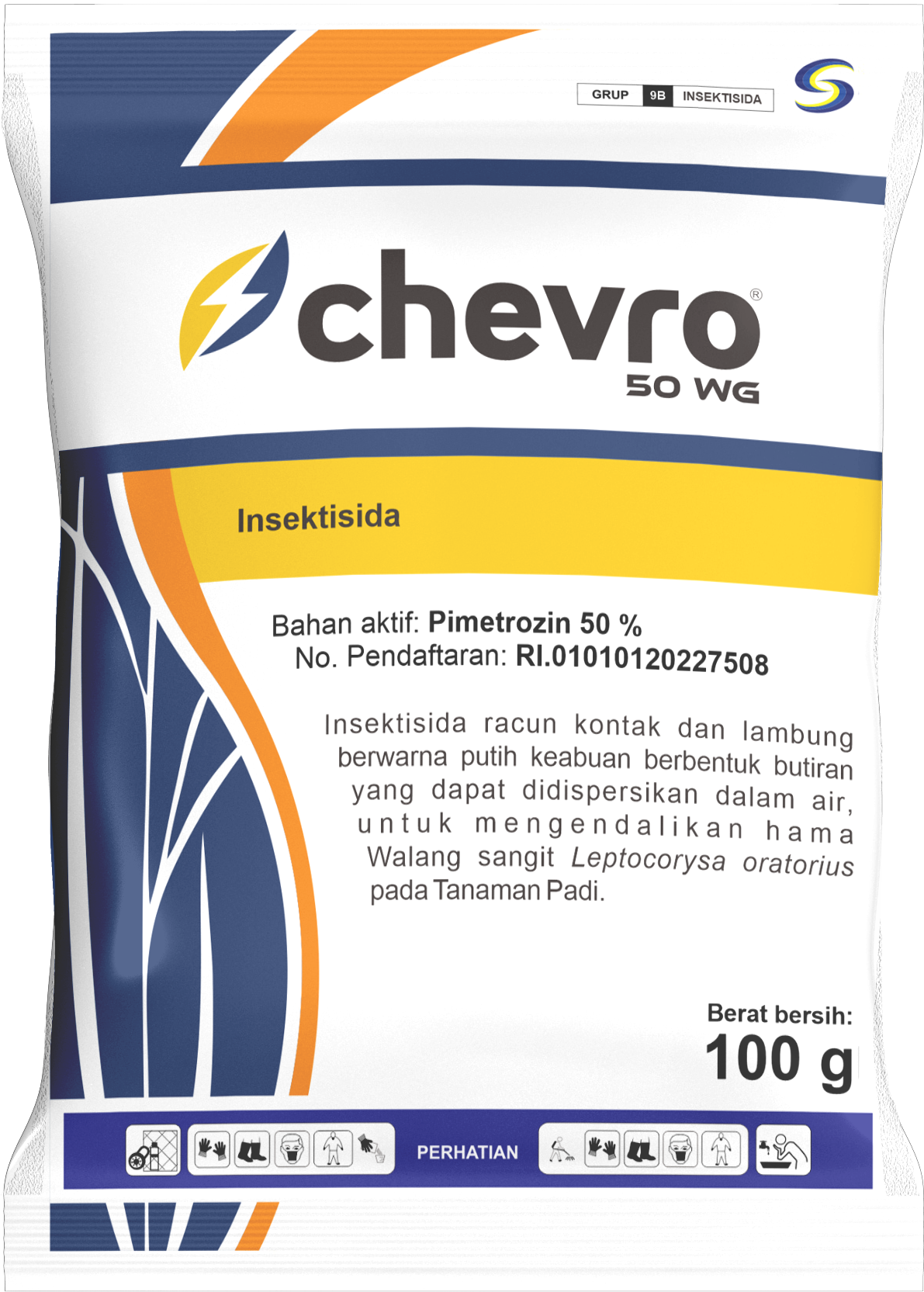

Insecticide
Chevro 50 WG
Pymetrozine 50%
-
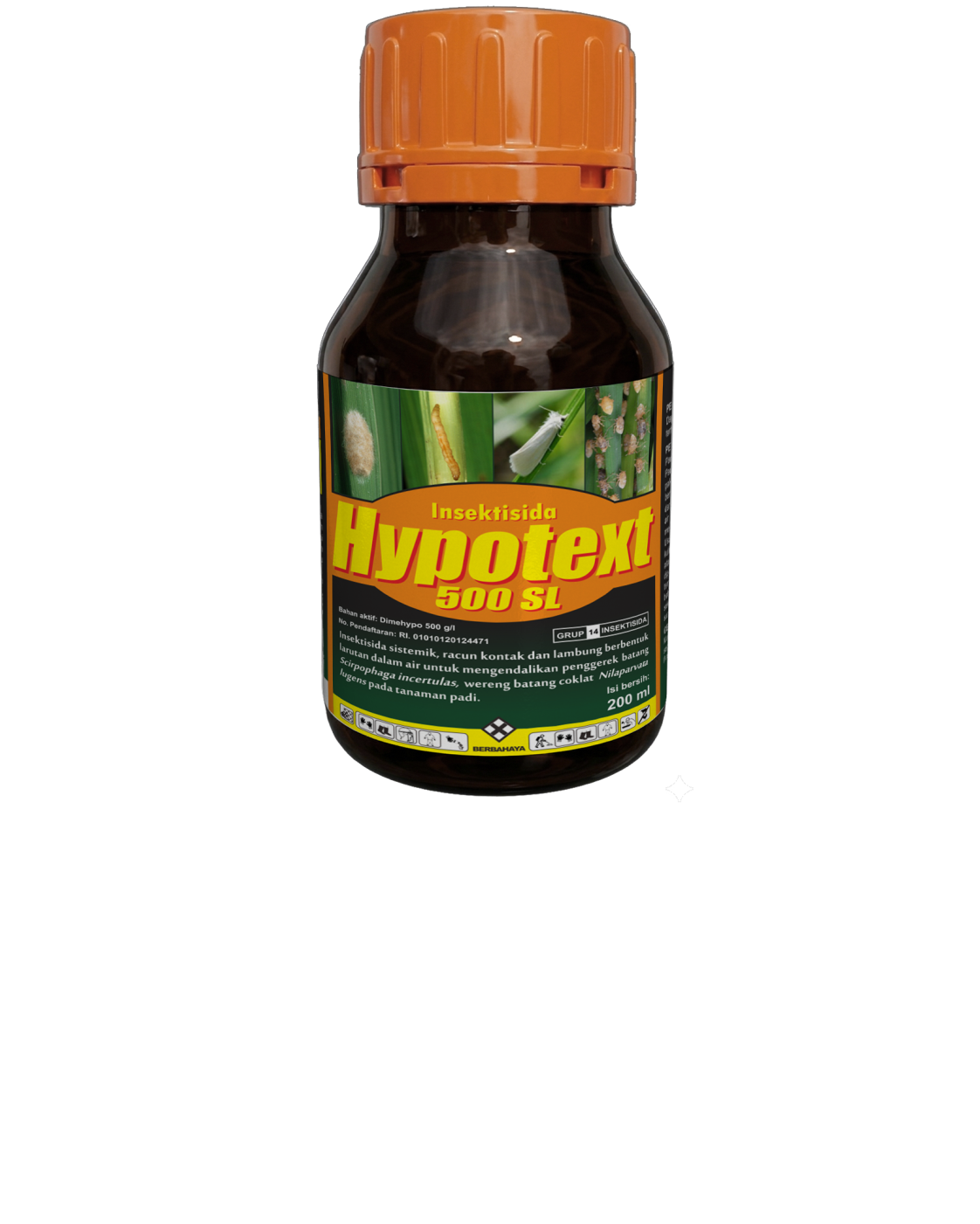

Insecticide
Hypotext 500 SL
Dimehipo 500 g/l
-
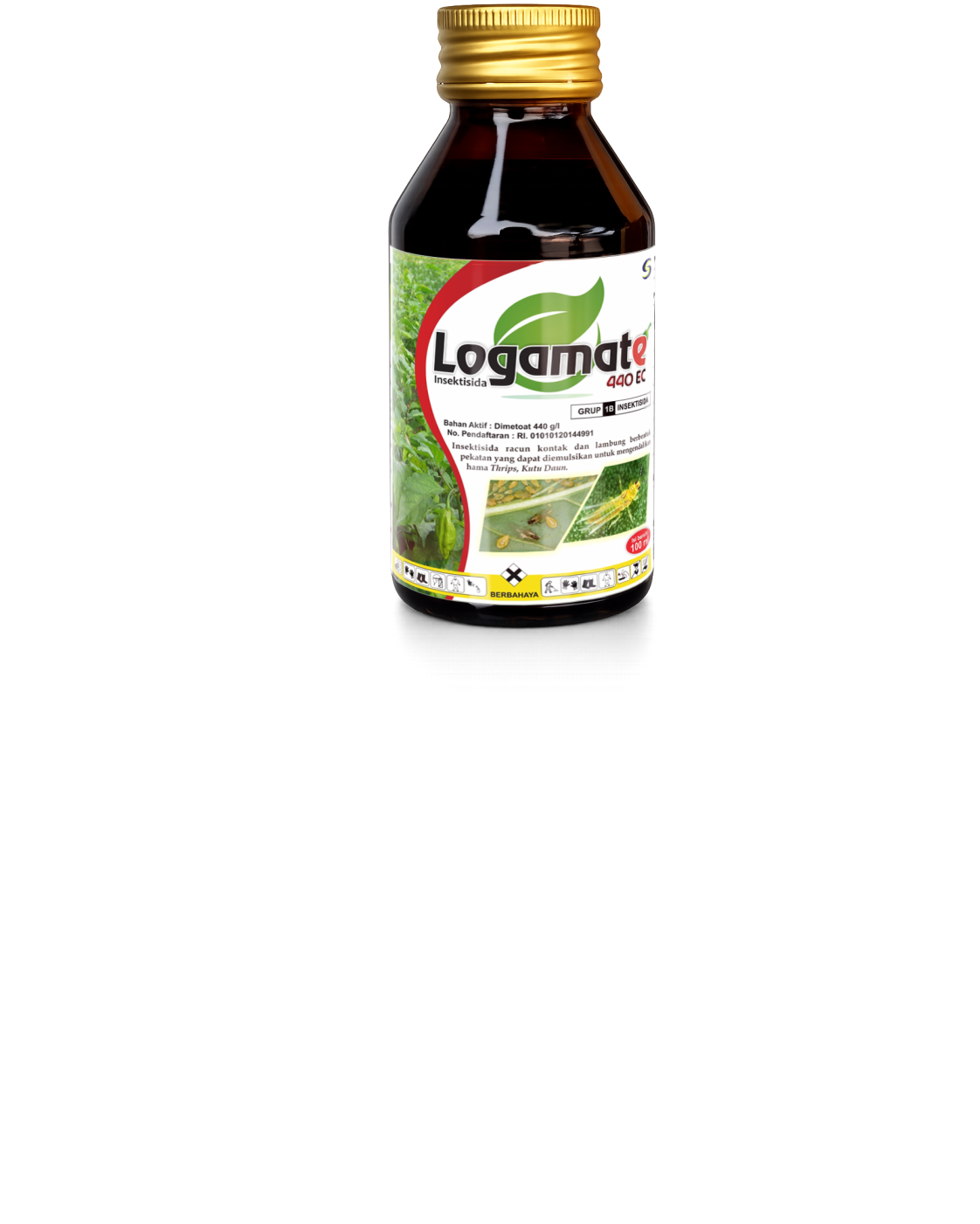

Insecticide
Logamate 440 EC
Dimethoate 440 g/l
-
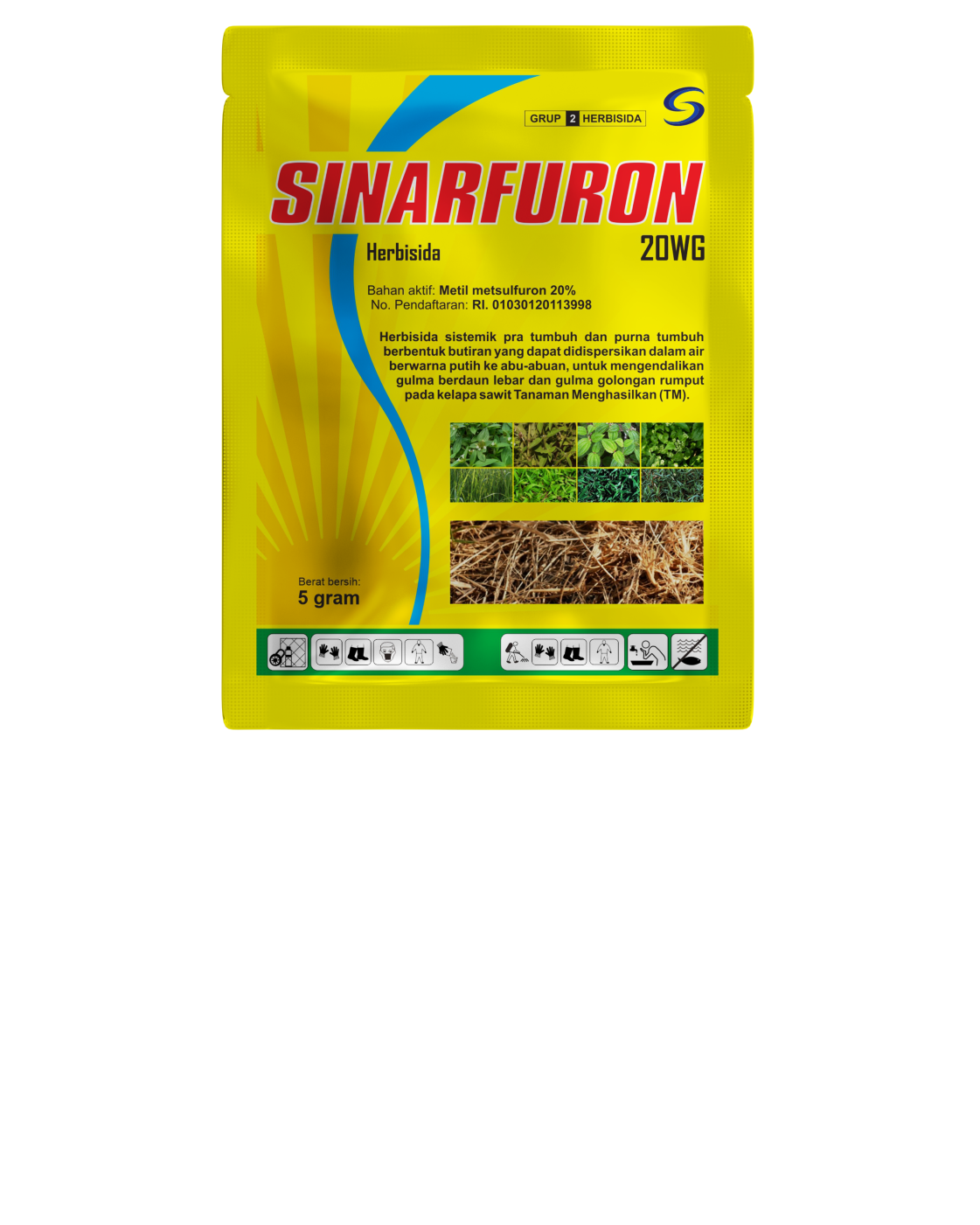

Herbicide
Sinarfuron 20 WG
Metsulfuron Methyl 20%
-

Herbicide
OneStar 260/15 EC
Pyrazosulfuron Ethyl 15 g/l
Oxadiazon 260 g/l