



Beware of Rice Weeds! Identify Common Types and Learn How to Control Them
Share:
About Article
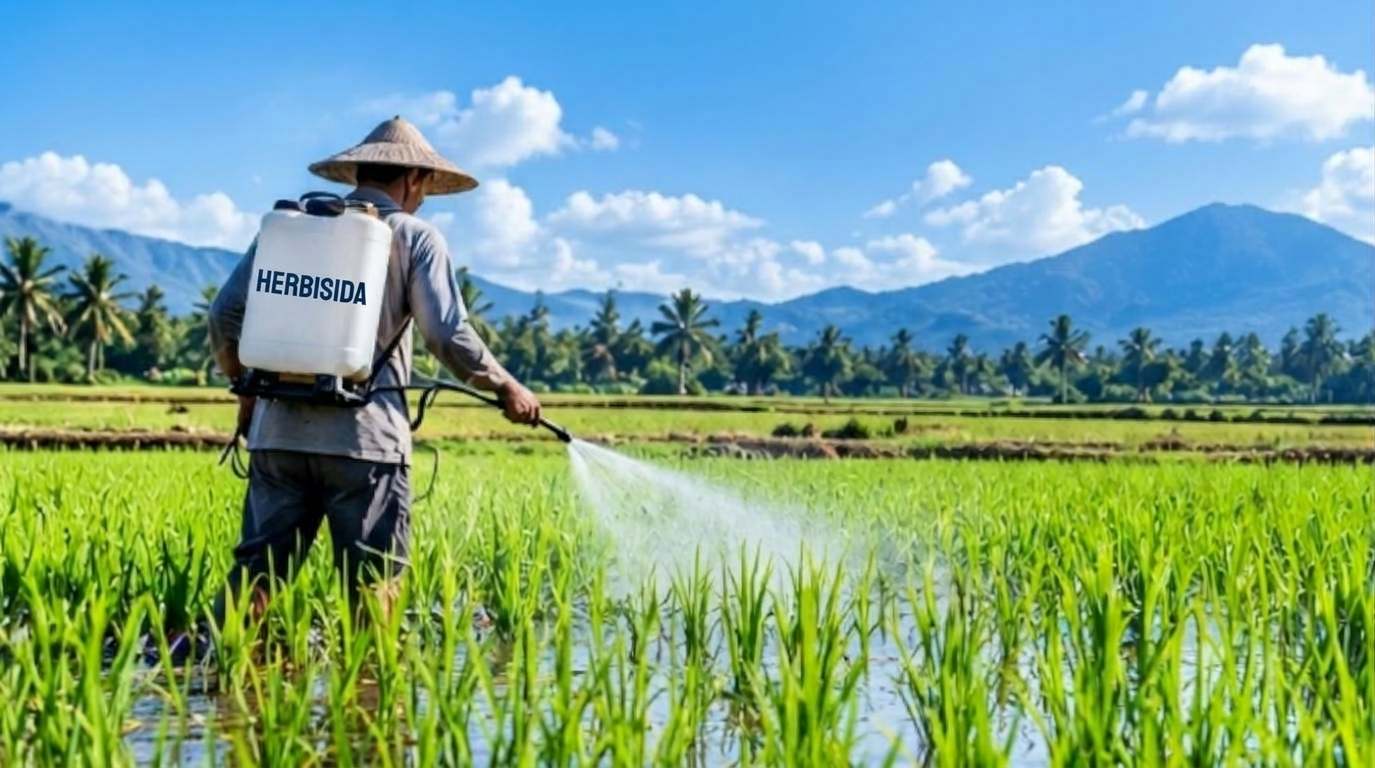
SGI - SGI Friends, have you ever noticed that your rice plants are not growing as well as expected, even though you have applied fertilizer and provided adequate irrigation? One factor worth checking is the presence of weeds in the paddy field.
Newly planted rice has limited ability to compete with other plants. During its early growth stages, the roots are still developing, few tillers have formed, and the canopy has not yet covered the soil surface. Meanwhile, weeds are growing too, drawing on the same water, sunlight, space, and nutrients. That is why weeds in lowland rice fields should be managed before they spread throughout the plot.
Weeds are considered harmful plants because they can reduce a crop’s ability to access the resources it needs. This competition may not be immediately visible. Rice plants can still look green even as their growth slows because weeds are taking up some of the available nutrients, light, and space. If left unmanaged, weeds can also add seeds to the soil seed bank, allowing the problem to return in the following growing season.
Effective weed management is especially important given the scale of rice cultivation in Indonesia. According to Statistics Indonesia (BPS), the country harvested approximately 11.32 million hectares of rice in 2025, producing around 60.21 million metric tons of dry paddy grain (gabah kering giling, or GKG). At this scale, managing fields from the earliest growth stages is essential for supporting crop growth and efficient farming operations.
Weeds can reduce rice yields by competing with the crop for sunlight, nutrients, and water. Uncontrolled weeds may also increase production costs and affect harvest quality. Weed competition deserves particular attention during the early stages of rice growth, especially in the first 30–40 days after transplanting or direct seeding. During this period, rice plants are still establishing themselves, so competition can interfere with their development. For this reason, farmers should begin scouting and managing weeds early, rather than waiting until they become large or widespread.
What Should Farmers Look for When Monitoring Weeds?
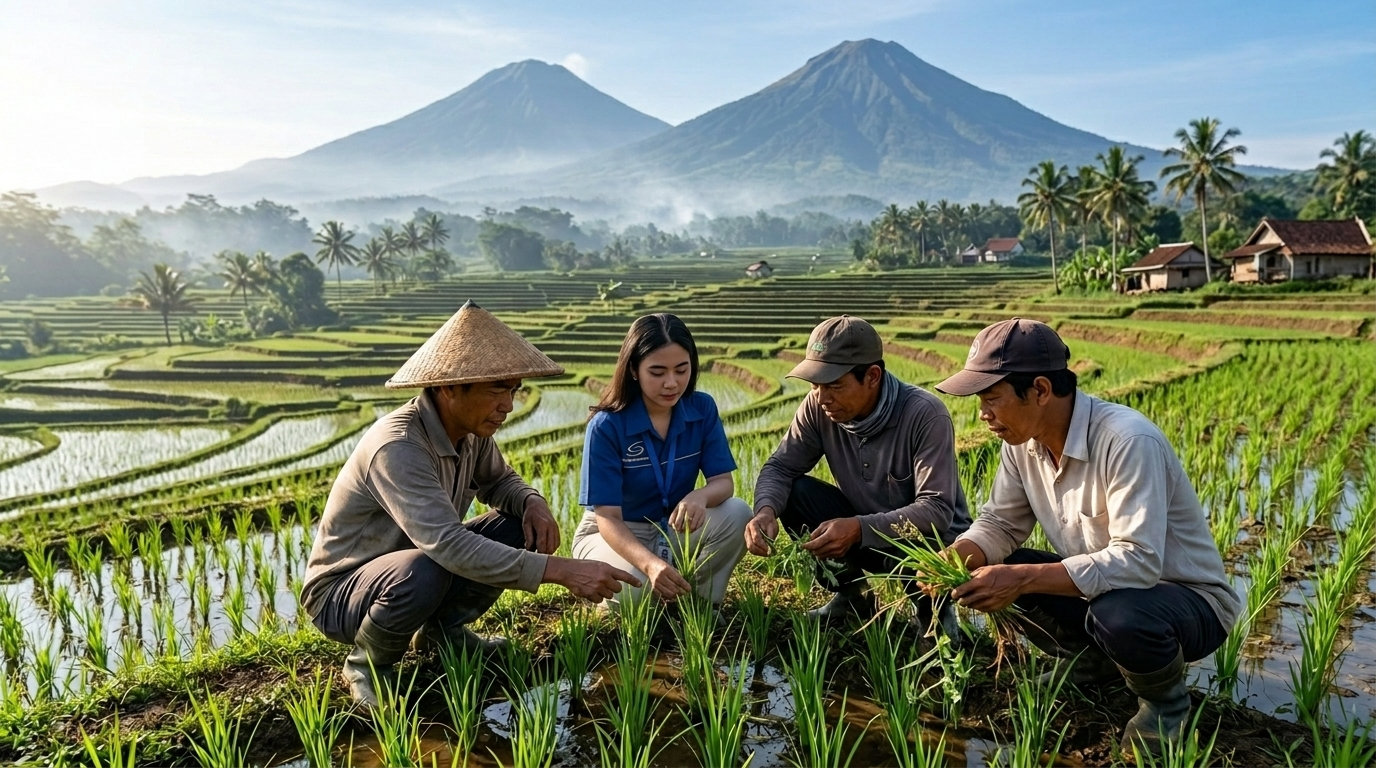
Monitoring weeds involves more than checking whether a field looks ‘untidy.’ SGI Friends should identify the dominant weed species, how many are present, which parts of the field are most heavily infested, and their growth stages. This information helps determine whether the main problem is broadleaf weeds, grasses, sedges, or a mixture of these groups.
In practice, weed populations can vary from one field plot to another. Differences in water depth, land leveling, water sources, past land preparation, seeds already present in the soil, and weed-management practices from previous seasons can all affect which weeds emerge. Management decisions should therefore reflect the current condition of each field, rather than relying solely on what was done in the previous season.
Get to Know Three Common Groups of Rice-Field Weeds
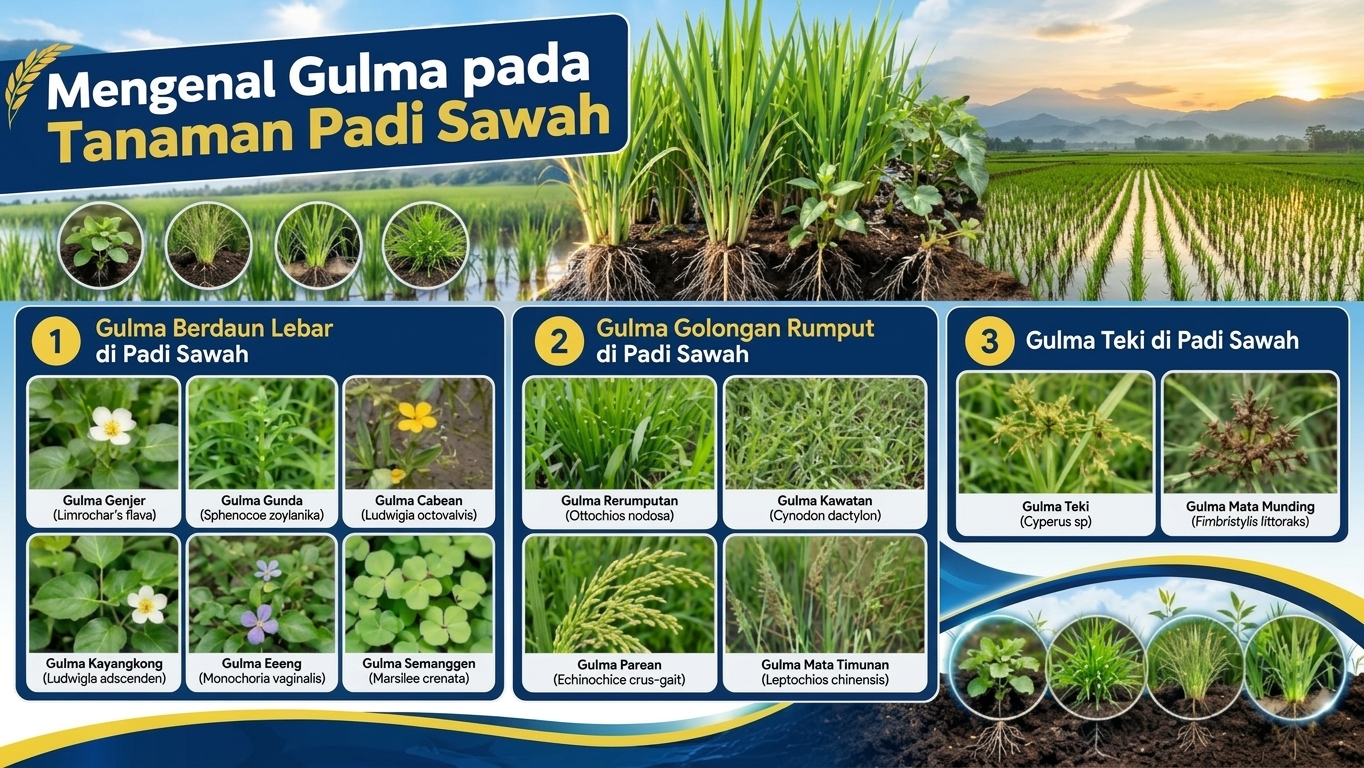
Broadleaf weeds, grasses, and sedges found in lowland rice fields.
1. Broadleaf Weeds
Broadleaf weeds are generally easier to distinguish from rice because their leaves do not resemble the narrow blades of rice plants. Examples include genjer (Limnocharis flava), gunda (Sphenoclea zeylanica), cabean (Ludwigia octovalvis), kayangkong (Ludwigia adscendens), eceng (Monochoria vaginalis), and semanggen (Marsilea crenata). Some of these species thrive in wet or flooded conditions and may therefore appear in rice fields that provide a suitable habitat.
2. Grassy Weeds
Grassy weeds require closer observation because their leaves can resemble those of rice, particularly when the plants are young. Examples include rerumputan (Ottochloa nodosa), kawatan (Cynodon dactylon), parean or jajagoan (Echinochloa crus-galli), and mata timunan (Leptochloa chinensis). Differences in the plant base, growth habit, leaf texture, leaf sheath, and panicle structure can help distinguish these weeds as they mature.
3. Sedges
Sedges have characteristics that distinguish them from grasses. Examples include Cyperus species and Fimbristylis littoralis. Some sedges can grow rapidly in moist field plots, forming clumps that compete with rice. At an early stage, distinguishing sedges from grasses helps SGI Friends understand the weed population before choosing a management method.
Why Is Early Weed Management More Beneficial?
During the early growth stages, rice and weeds are both developing roots and leaves. When weeds occupy the available space more quickly, rice must compete harder for resources. Losses caused by weed competition are generally most severe during the first 30–40 days after transplanting or direct seeding. This does not mean weeds can be ignored after that period; rather, it shows that damage caused by delayed early management can be difficult to make up for later.
Early weed management also helps prevent weeds from flowering and setting seed. The more weed seeds return to the soil, the larger the seed bank that may give rise to new weeds in the next growing season. The goal, therefore, is not just to make a field look clean today, but also to reduce the source of weed problems in future seasons.
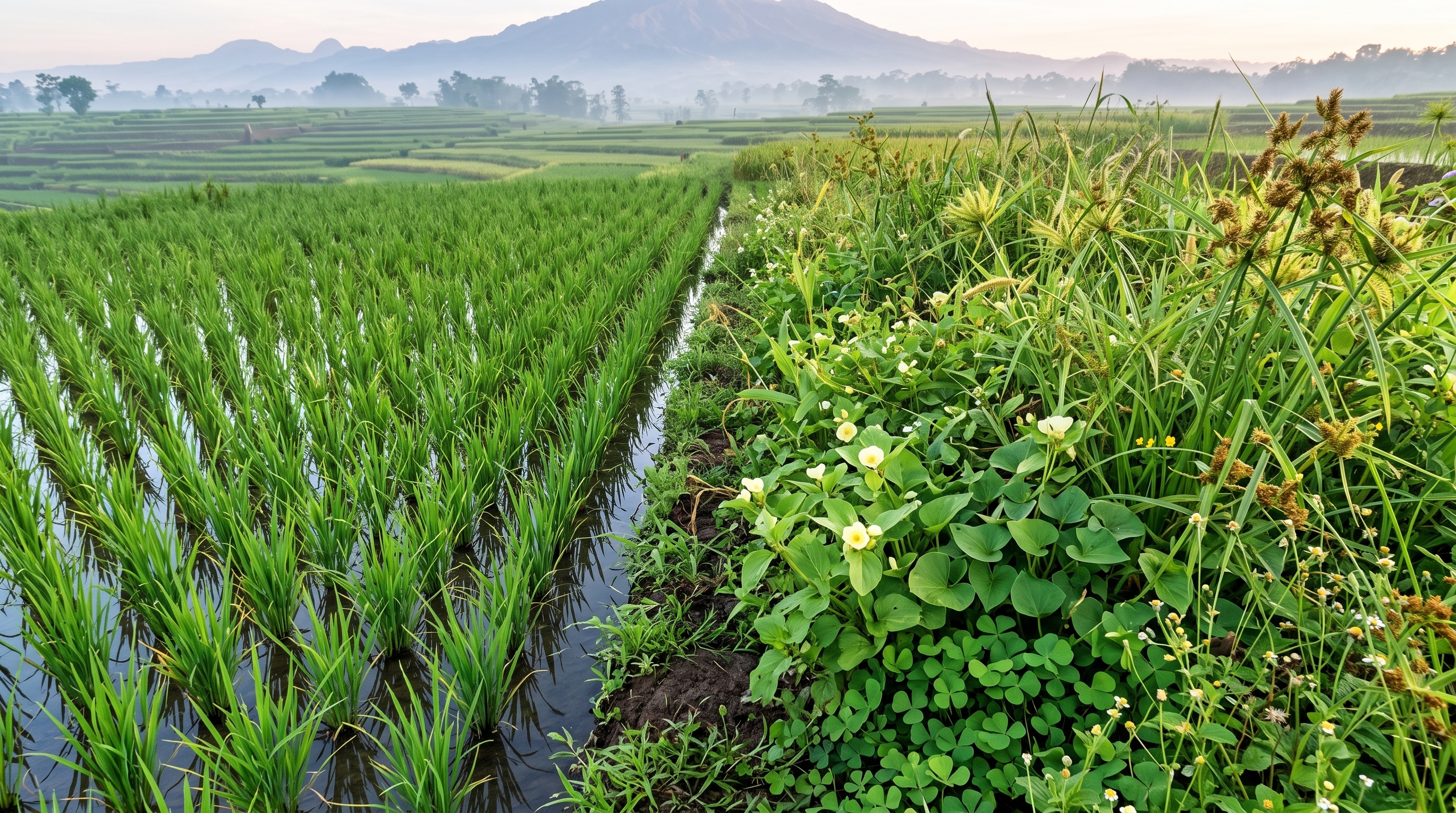
Weed Management Strategies for Better Rice Growth
Not all weeds can be managed in the same way. The appropriate approach depends on the weed species, their stage of growth, water conditions, and the age of the rice crop. Here are several practical steps farmers can take.
1. Monitor Fields Regularly
Inspect rice fields regularly, especially during the crop’s early growth stages. Look at which weeds have emerged, how widely they are spreading, and which areas of the field have the heaviest weed growth.
Regular monitoring helps farmers detect problems early and avoid making management decisions based only on assumptions.
2. Use an Integrated Weed Management Approach
Weeds can be managed through a combination of methods, including proper land preparation, high-quality rice seed, water management suited to the crop’s needs, and manual or mechanical weeding where practical.
An integrated approach makes weed management more targeted and reduces reliance on any single method.
3. Choose Herbicides Based on the Target Weeds
In some situations, herbicides can be one option for managing weeds. However, product selection must take into account the target weed species, field conditions, the growth stage of the rice, and the product’s instructions for use.
Selective herbicides are designed to control particular weeds while allowing different levels of tolerance among the crop and other plants. Nevertheless, selectivity does not mean a product is safe under every condition. Correct use according to the product label remains essential.
SGI Friends should also pay attention to the recommended application rate and timing, weather conditions, spray equipment performance, and the use of personal protective equipment in accordance with safety instructions. Avoid mixing products unless there is a clear recommendation to do so.
4. Evaluate Weed Control Results
After weed-control measures have been applied, check the field again. Observe whether the targeted weeds are still growing, whether other weeds have emerged, and how the rice plants are developing.
If the results are not as expected, assess possible causes, such as differences in weed species, weed age at the time of treatment, water conditions, or application accuracy. Do not increase the application rate without following the instructions on the product label.
Regular evaluation helps farmers choose their next steps more accurately and efficiently.
SGI Is Preparing a New Weed Management Solution
Managing weeds is not simply about making a field look clean. Effective weed management is an important part of supporting rice growth, reducing competition in the field, and maintaining farm productivity.
Understanding farmers’ needs is an essential step toward providing agricultural solutions that address real challenges in the field.
As part of this commitment, PT Sinar General Industries (SGI) will soon introduce a selective herbicide to help manage weeds in rice cultivation.
This upcoming solution reflects SGI’s ongoing efforts to support farmers in addressing weed-management challenges. Further information about the product, its target weeds, and instructions for use will be provided at the official launch.
So, SGI Friends, have you identified the weeds in your rice fields and taken the appropriate steps to manage them?
Stay tuned for more information from SGI. Together with SGI, let’s grow alongside farmers and work toward a more productive agricultural future for Indonesia.
Together with SGI Supporting Crop Growth and Agricultural Productivity
PT Sinar General Industries remains committed to supporting farmers by providing quality products that promote crop growth and help improve agricultural productivity.
If SGI Friends need information about quality fertilizers and pesticides for different crops, our team is ready to discuss your farming needs. Visit the PT SGI website to explore product information, consultation services, and agricultural solutions suited to your farming operations.
27 October 2026
Mango Season Is Here! Discover Which Mango Varieties Are Right for Your Land, SGI Friends
Let’s learn about the types of mangoes that are suitable for your land, as well as tips on flowering and the role of boron-based fertilizer,...
 17 October 2026
A Nozzle Is More Than Just the Tip of a Sprayer: Here’s How It Affects Spraying
Nozzles determine much more than just the direction of the spray. They also affect droplet size, flow rate, and spray pattern. Let’s take a...
 12 October 2026
Understanding Glyphosate A Systemic Herbicide for Weed Control
Glifosat dikenal sebagai herbisida sistemik non-selektif yang bekerja dari daun menuju titik tumbuh tanaman.