



A Nozzle Is More Than Just the Tip of a Sprayer: Here’s How It Affects Spraying
Share:
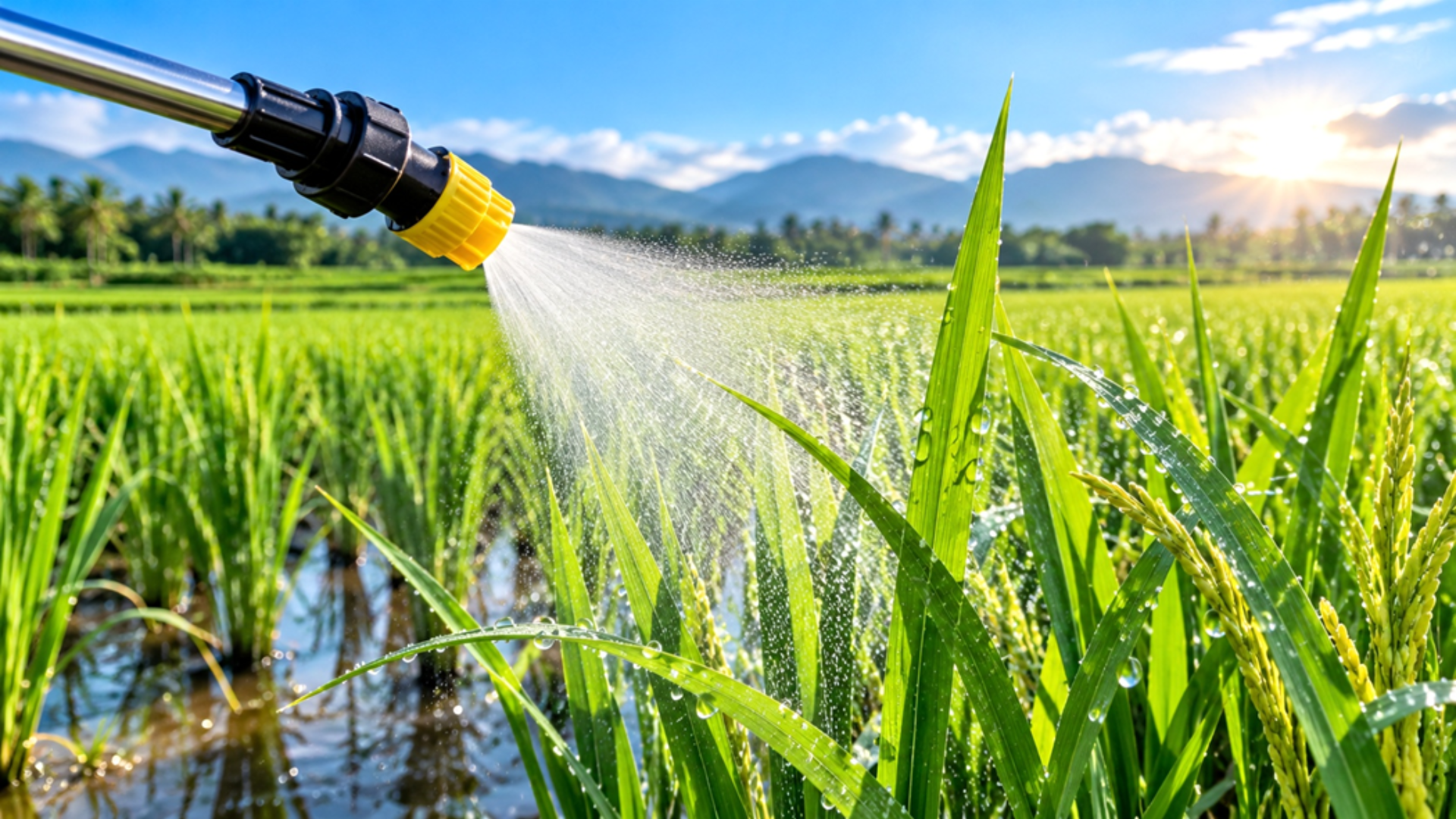
About Article
Sobat SGI, have you ever felt that you were spraying the same solution, yet the results in the field were not always uniform? Some parts of the leaves may be evenly wet, while others receive only a small amount, and sometimes the spray looks like a fine mist that is then carried away by the wind. One small component that plays a major role in determining these conditions is the nozzle at the end of the sprayer.
A nozzle is not merely an outlet for the spray solution. The shape of its opening, nozzle type, operating pressure, distance from the target, and physical condition all influence flow rate, spray pattern, and the droplet size spectrum produced. This is why two sprayers using the same solution can give different results when their nozzles and calibration differ.
Selecting the right nozzle should always be aligned with the pesticide label instructions and the nozzle manufacturer’s guidance. The goal is not to produce as much spray as possible, but to deliver the correct volume to the target with suitable coverage while keeping drift risk as low as possible.
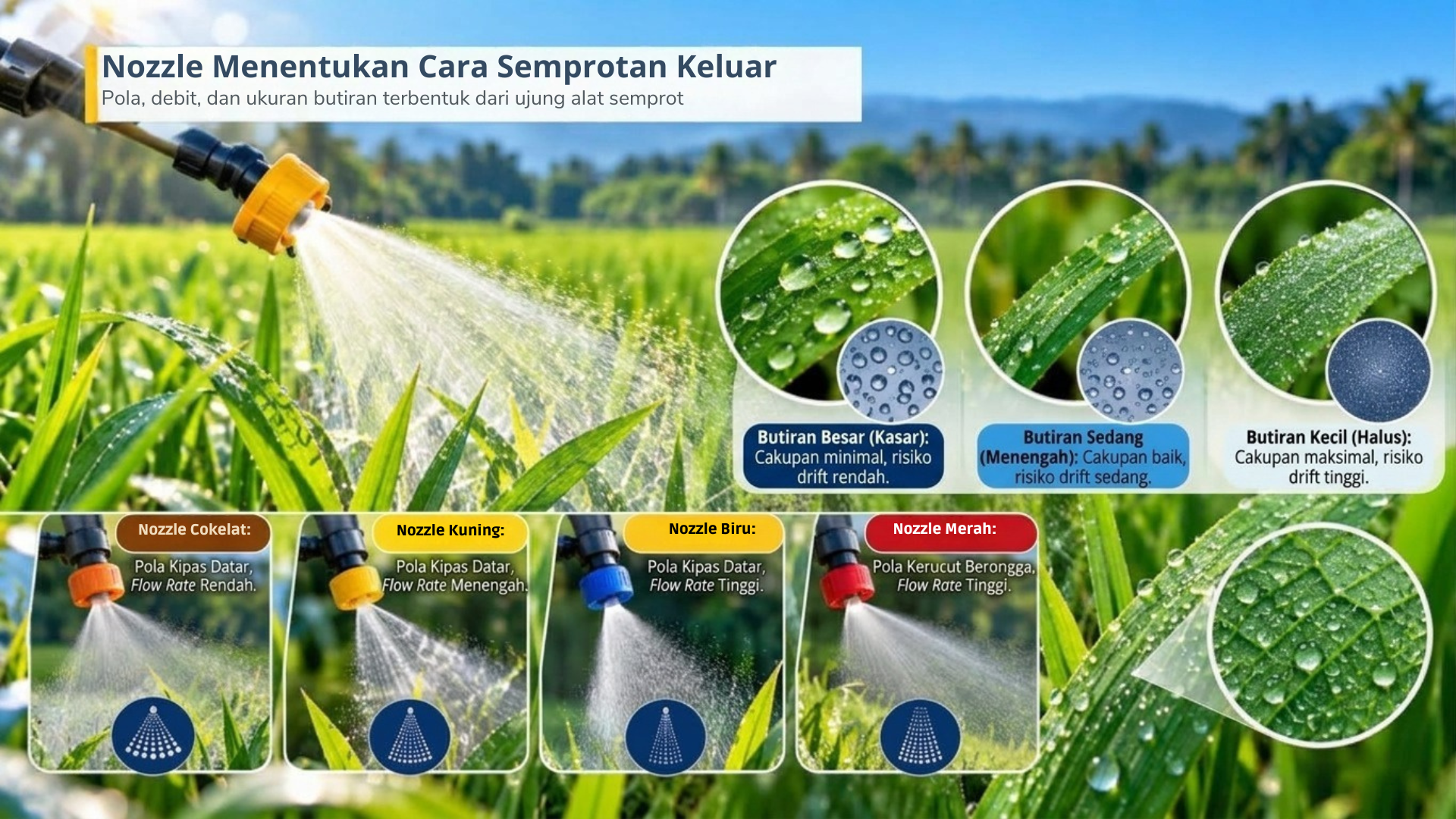
The nozzle determines the spray pattern, flow rate, and droplet size produced by the sprayer.
In simple terms, a nozzle is the component at the end of a sprayer that converts liquid flow into spray droplets with a specific pattern. Its role is very important because spraying results are determined not only by the active ingredient, but also by how the material reaches the target surface.
The amount of spray solution applied is influenced by three main variables: nozzle flow rate, travel speed, and effective spray width. Nozzle flow rate itself changes according to orifice size, pressure, and the characteristics of the spray solution. This means that changing the nozzle or adjusting the pressure without recalibration can alter the amount of spray solution actually received by the field.
In practice, the nozzle affects four important aspects: how much liquid is released per unit of time, the shape of the spray distribution, the size of the droplets formed, and how evenly the target surface is covered. These four factors are closely related.
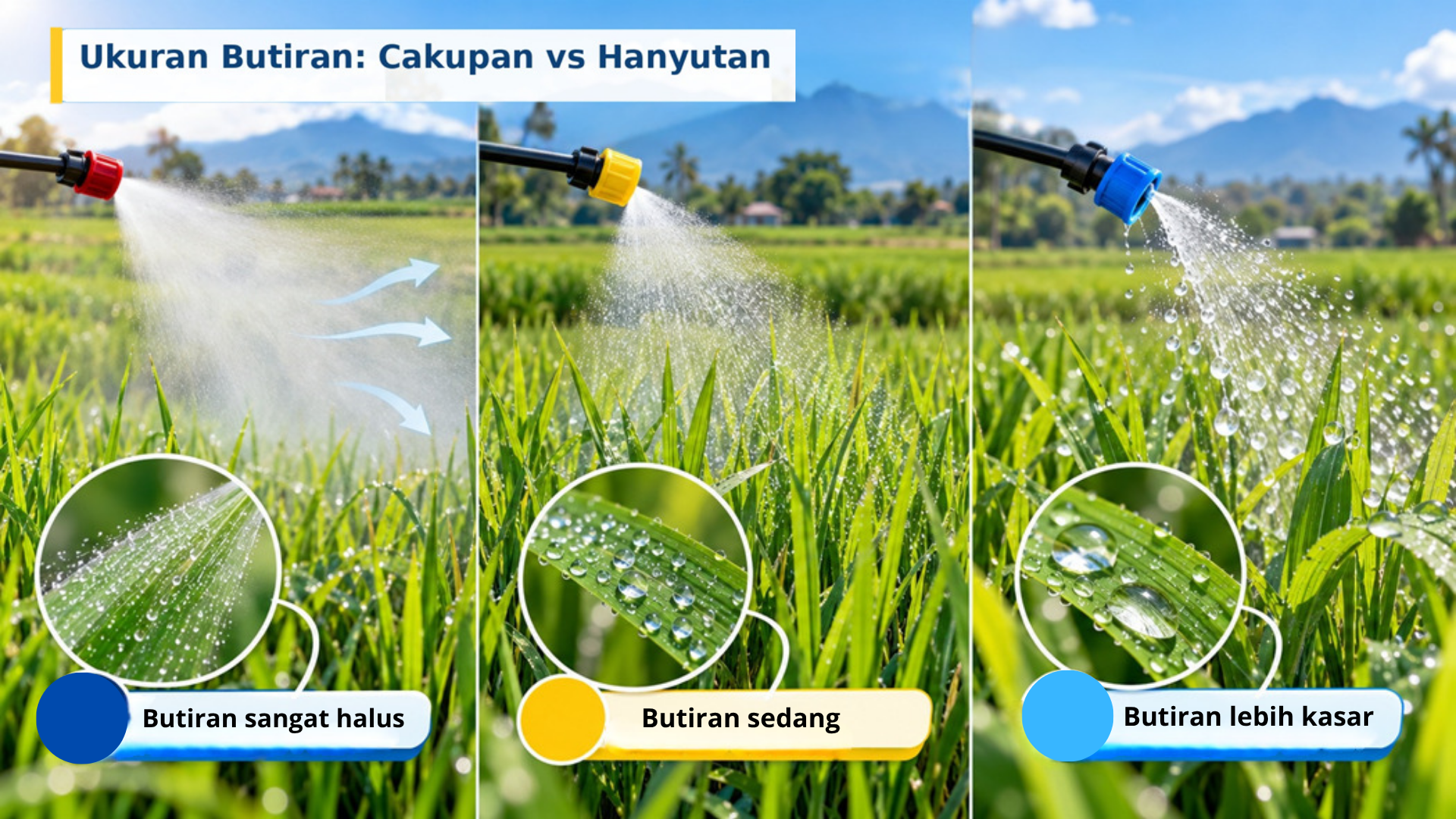
Droplet size affects leaf coverage and the risk of spray drifting away from the target.
Very fine droplets can create many spray deposits on the leaf surface, but their low mass allows them to remain airborne longer and makes them more easily carried by air currents. Larger droplets, on the other hand, tend to be more resistant to drift, but they produce fewer spray deposits at the same spray volume.
Droplet size is one of the main factors affecting spray drift. Small droplets take longer to fall and are more likely to move away from the target. Therefore, a nozzle should not always be expected to produce the finest possible mist.
Droplet size should be selected according to the product type, target, coverage requirements, and label instructions. Some labels specify a particular droplet size category. For applications that require high surface coverage, droplets that are too coarse may reduce coverage. Conversely, aiming for droplets that are too fine can increase the risk of drift.
Practical Tips
• Do not judge spray quality only by how much visible mist is produced.
• Check the product label for the required droplet size or nozzle type.
• Follow the nozzle manufacturer’s guidance, because the same nozzle type can produce different droplet sizes at different
pressures.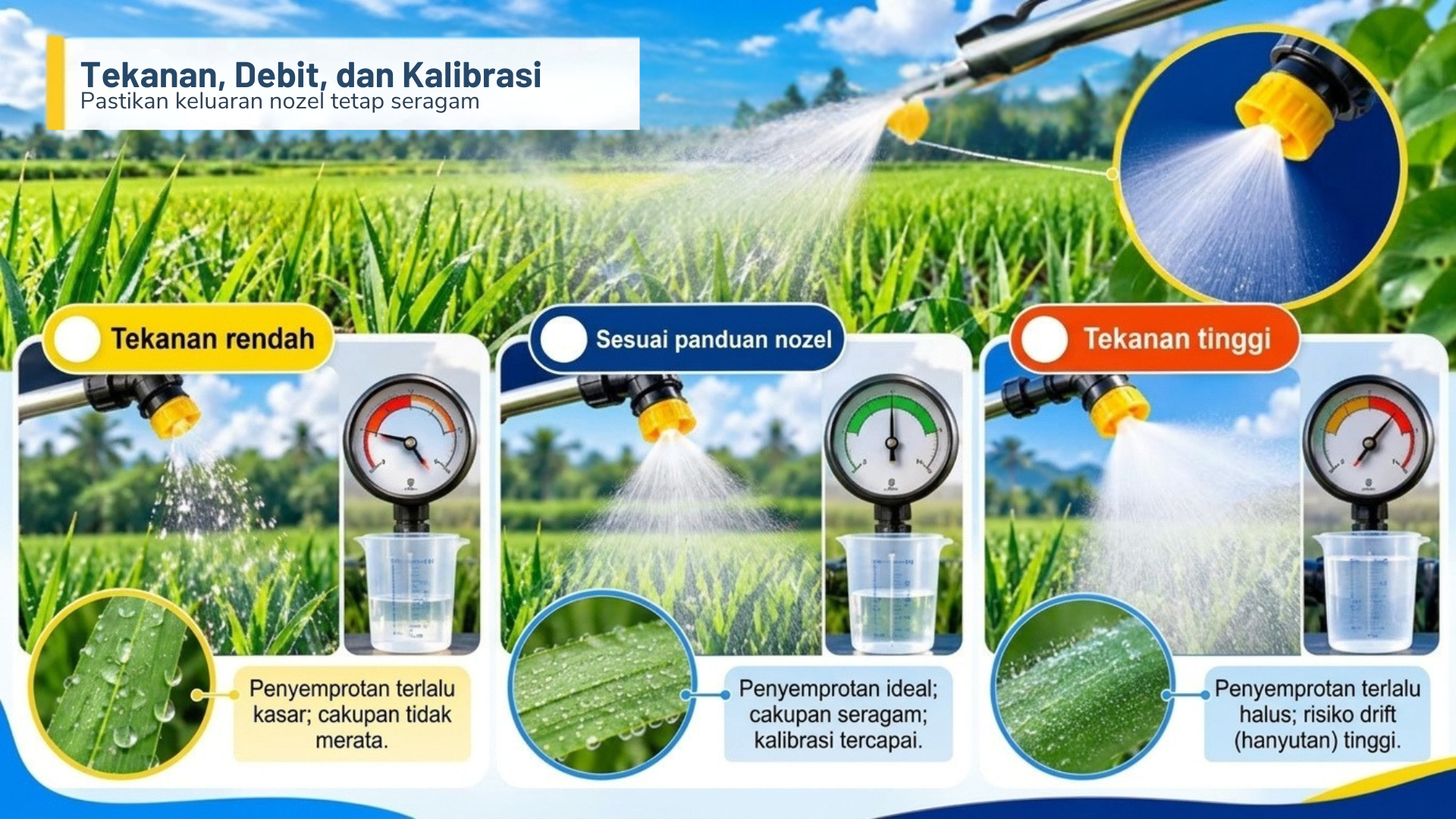
Pressure affects flow rate and droplet size; calibration helps ensure the result remains on target.
Increasing pressure can increase flow rate, but the relationship is not linear. In certain nozzle systems, pressure must be increased by about four times to double the flow rate. At the same time, higher pressure generally produces smaller droplets, which can increase the potential for drift.
For this reason, pressure is not a simple control for “making the spray stronger.” If the output is far from the target rate, changing nozzle size is often more appropriate than excessively increasing pressure. After changing the nozzle, pressure, or travel speed, the sprayer should be recalibrated.
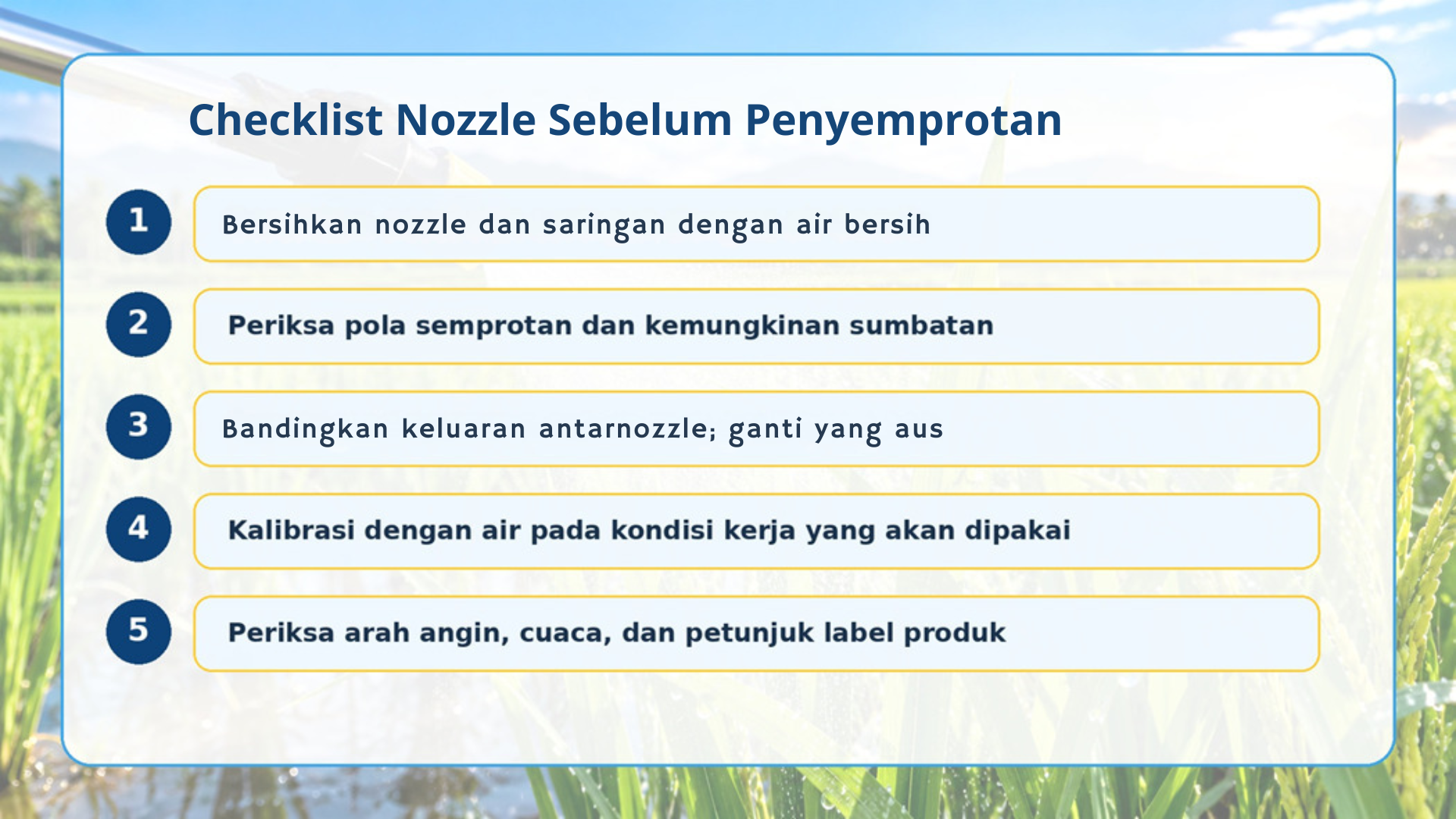
Simple Calibration for a Backpack Sprayer
• Fill the tank with clean water, not pesticide, when carrying out the initial test.
• Select a test area that represents field conditions and walk at the speed normally used during spraying.
• Spray the area as usual, then measure the volume of water used.
• Repeat the test several times until the results are relatively consistent, then calculate the required spray volume per unit area.
• If the pressure, nozzle, or travel speed changes, recalibrate the sprayer.
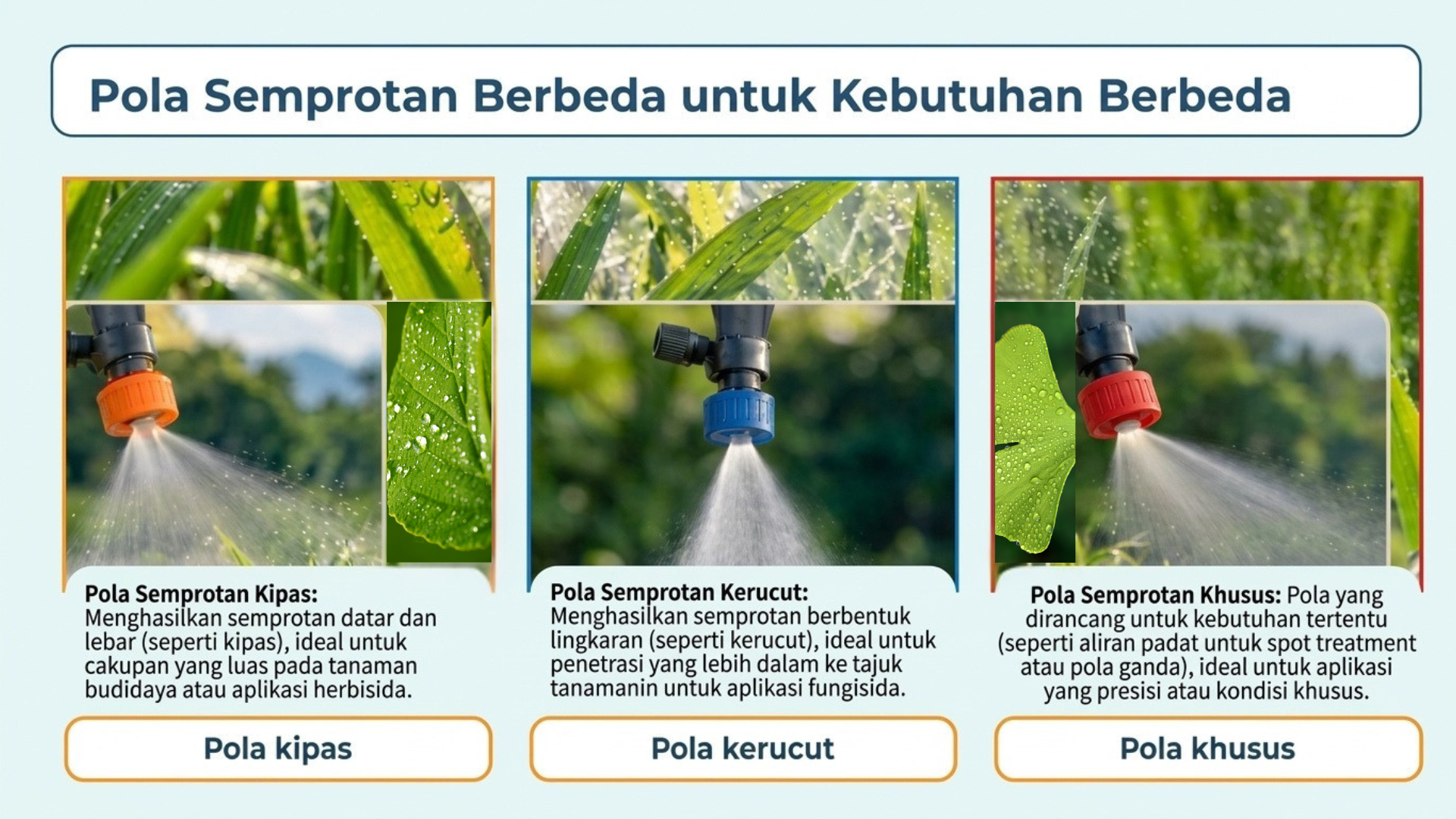
Different spray patterns are designed for different application needs.
Different nozzle types produce different spray patterns. Flat-fan nozzles create a fan-shaped distribution and are widely used for broadcast or band applications. Cone nozzles produce a circular pattern and are often used when canopy coverage is an important consideration. There are also specialized flow nozzles designed for specific targets.
A spray pattern is more than just the shape visible in the air. On a boom sprayer, the patterns from adjacent nozzles need to overlap correctly to achieve uniform distribution across the spray swath. Boom or nozzle height also determines whether the patterns overlap as intended.
Because each nozzle is designed for a specific pressure range and purpose, do not choose one based only on its color or physical appearance. Use the manufacturer’s nozzle chart and follow the label requirements for the product being applied.
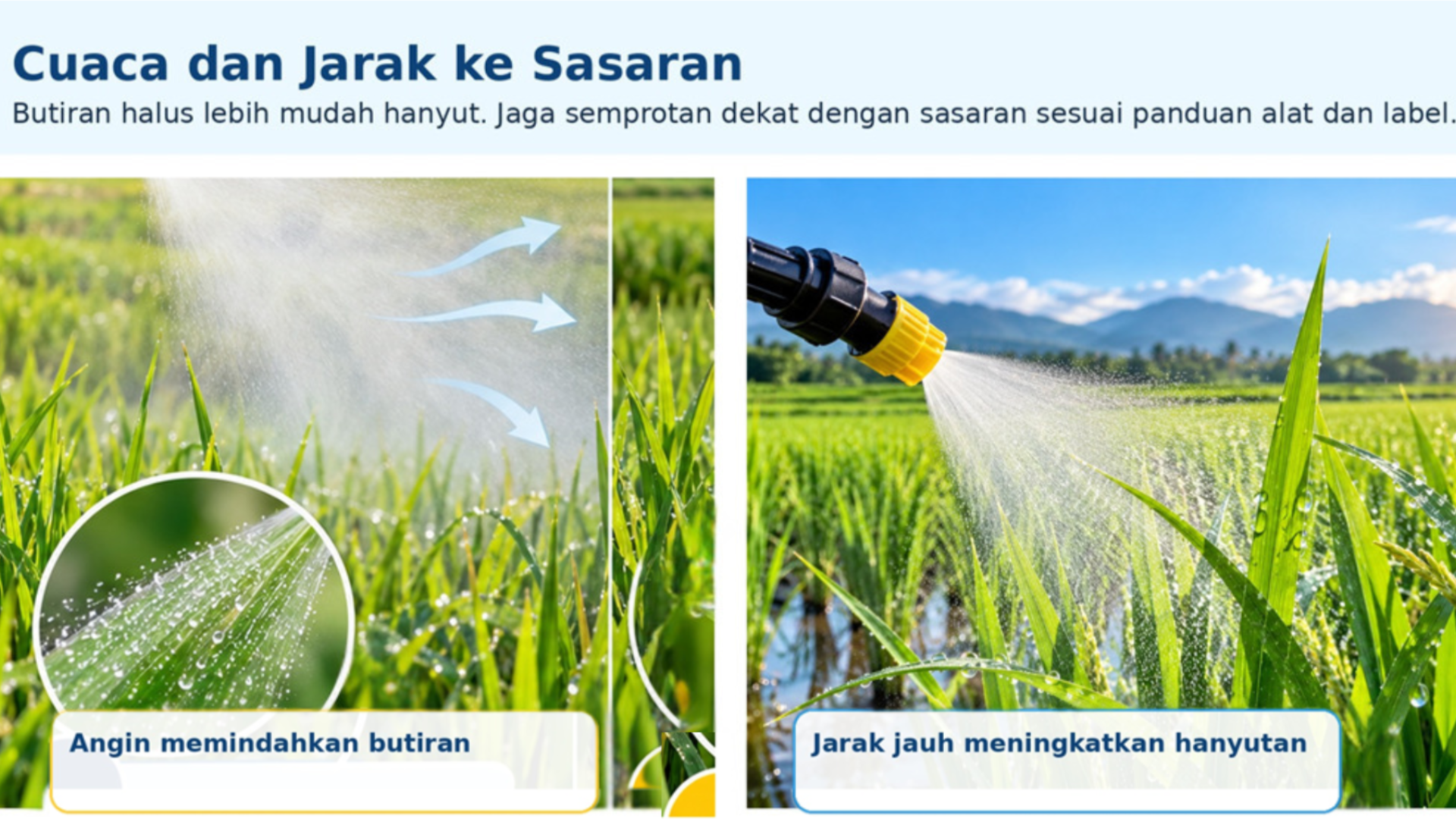
Wind and the distance between the nozzle and the target affect the likelihood of spray droplets moving away from the target.
Spray droplets do not travel through empty space. After leaving the nozzle, they must move through the air before reaching the target. The longer they remain airborne, the greater the chance that their direction will be influenced by wind and atmospheric conditions.
Spray drift is the movement of pesticide droplets through the air during application or shortly afterward to a location that is not the intended target. Nozzle selection, orifice size, pressure, release height, wind direction, and wind speed can all affect this risk.
A nozzle positioned too high increases the potential for drift. As a practical principle, the nozzle should be kept as low as possible while still allowing the spray pattern to operate uniformly according to its design and the equipment instructions. When wind direction changes or wind speed increases, the application should be reassessed and the restrictions on the product label should be followed.
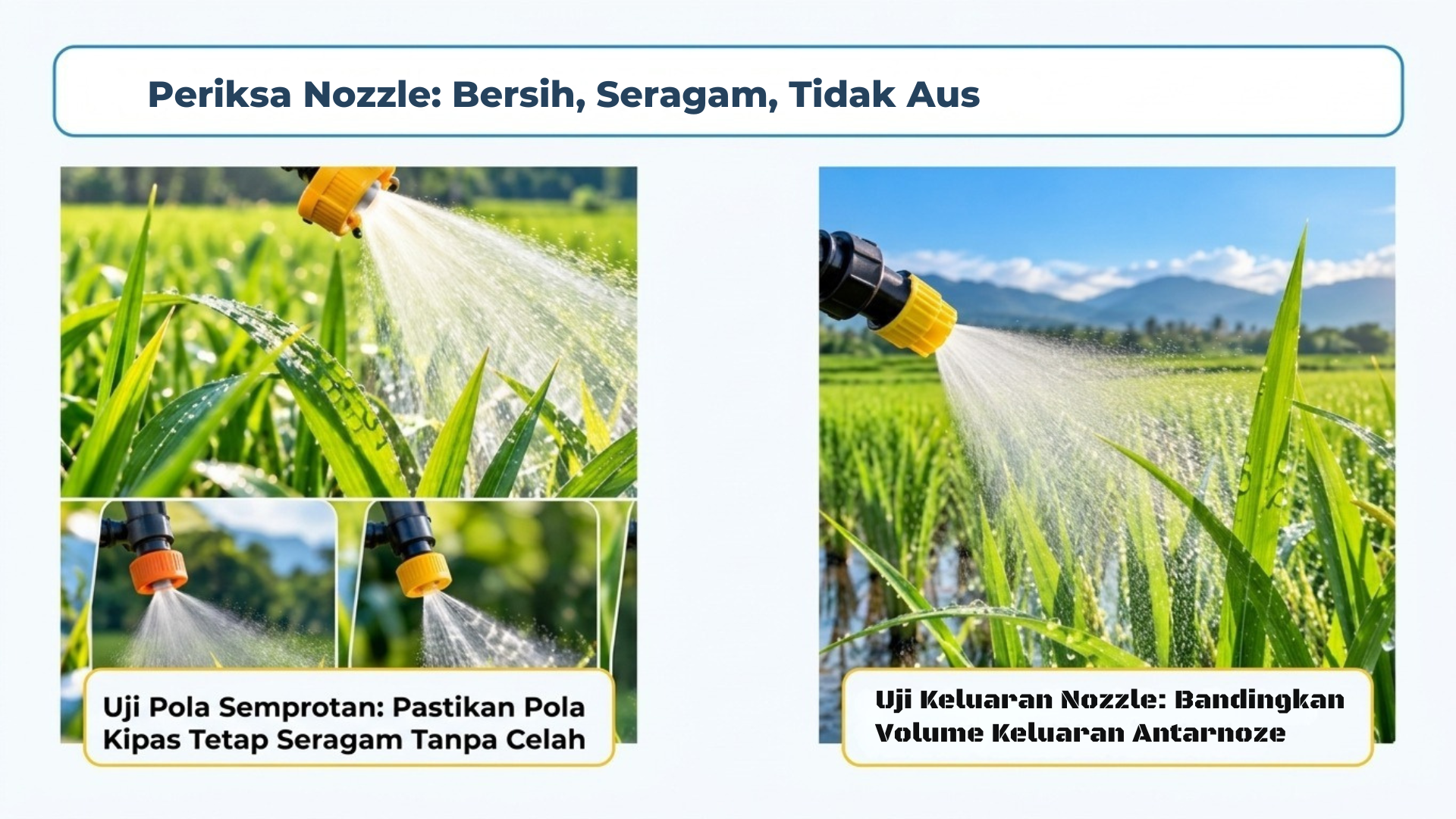
A clogged or worn nozzle can change the spray pattern and flow rate..
A nozzle operates through a very small opening. Deposits, dirt, or wear can change the shape of the spray pattern and the amount of liquid released. The effect may not be immediately visible from the tank, but it can appear in the field as strips that are too wet, too dry, or have an uneven spray pattern.
To clean a nozzle, use clean water and tools that will not damage the opening. Avoid clearing the orifice with metal objects because this can enlarge it and change the flow rate. If the spray pattern remains poor after cleaning, the nozzle may need to be replaced.
Small Nozzle, Big Impact
A nozzle may be small, but spraying quality depends heavily on it. Selecting the right type, using the proper operating pressure, calibrating the equipment, choosing the appropriate droplet size, maintaining the correct distance from the target, considering weather conditions, and keeping the nozzle in good condition all determine whether the spray solution actually reaches its intended destination.
Sobat SGI do not need to chase a spray that looks the heaviest or the finest. What matters more is using a spray that matches the product requirements, target, field conditions, and label instructions. This approach helps improve spray efficiency while reducing the risk of off-target application.
PT Sinar General Industries remains committed to providing solutions for farmers through high-quality products that support crop growth and help improve agricultural productivity.
If Sobat SGI need information about quality fertilizer and pesticide solutions for various types of crops, consult your agricultural needs with us. Visit https://pt-sgi.com/ to obtain product information, consultation services, and agricultural solutions that suit your farming needs.
 12 October 2026
Understanding Glyphosate A Systemic Herbicide for Weed Control
Glifosat dikenal sebagai herbisida sistemik non-selektif yang bekerja dari daun menuju titik tumbuh tanaman.
 14 August 2026
The Spirit of Independence Boosts Crop Productivity with Coin 45 Boron Fertilizer
The benefits of boron fertilizer for plants, its role in flowering and fruit formation, and how to use Coin 45 correctly and in a balanced m...
 05 August 2026
How to Choose the Right Pesticide to Effectively Control Plant Pests
Choosing the right pesticide is essential for effectively controlling plant pests. Let’s take a look at this comprehensive guide on types of...